I Can’t Believe Hospitals Are Letting AI Agents Do This in 2026
Introduction:
Now picture yourself waking up tomorrow (well, not tomorrow, rather in 2026) and finding out that your inbox is cleared because an AI agent took care of everything while you were sleeping. Well, guess what, this isn’t some far-off futuristic scenario but something that's taking place right now within every industry.
Some examples include:
Sierra: They created autonomous agents (worth $10B towards the end of last year) that deal with customer service using voice and chatbots, thus automating all those annoying call centers.
Cognition Labs: Their artificial intelligence Devin is a partner capable of planning, coding, and deploying applications almost independently.
Finance and Banking: The software Ramp utilizes agents to automatically route invoices, while their competitor Wells Fargo employs agents in their Fargo assistant, already responding to more than a billion interactions by customers.
Education: Khan Academy created Khanmigo, which serves as a tutor to over 7 million children.
Salesforce: Using Agentforce platform, Salesforce agents take over sales pipelines and marketing campaigns completely autonomously.
These aren't those basic, "I don't understand that" chatbots we used to deal with. This is agentic AI, capable of sensing data coming from everywhere, reasoning about what needs to be done, applying the right technology to achieve its goals, and learning from mistakes along the way. There will never be a greater revolution in how work is being done.
Additionally, these AI agents are also used in healthcare. Doctors are burnt out, and administrative work takes up about more than 40% of their day. AI assistants are working side-by-side with physicians by:
Taking notes of conversations between doctors and patients and updating patients' medical information.
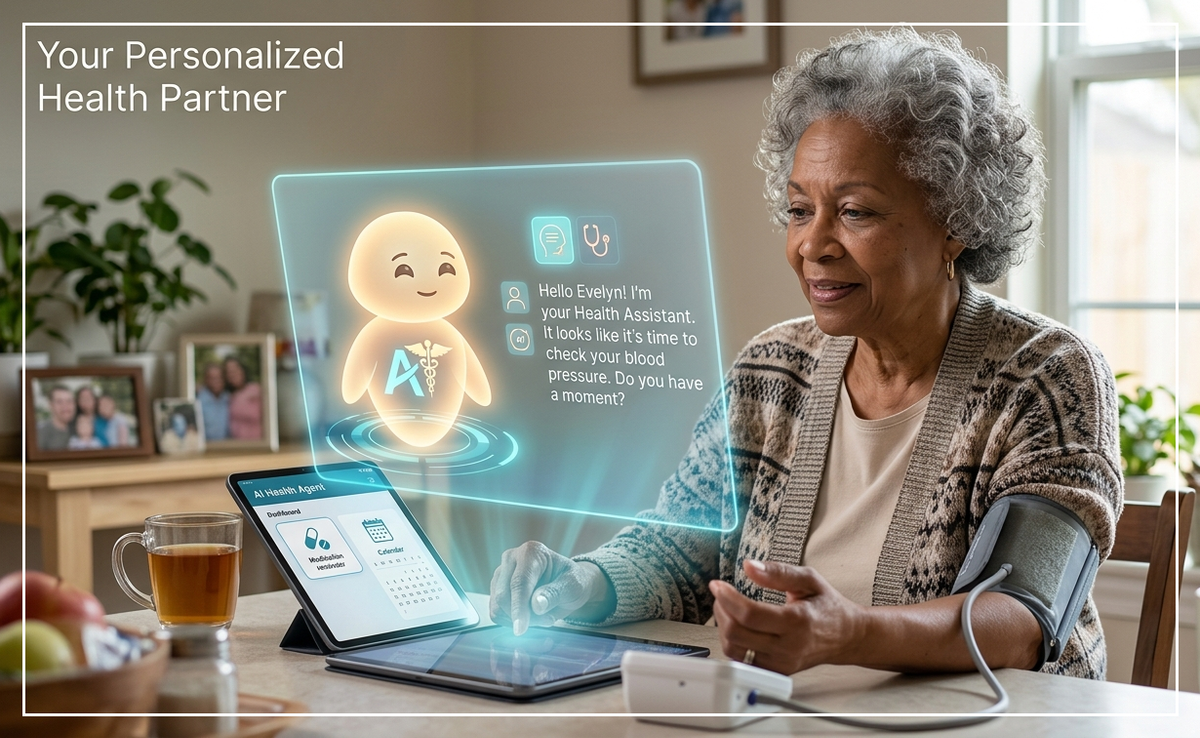
Constantly monitoring your health, 24 hours per day, without needing you to go to a medical institution.
Assisting in coordination of care after discharge and efficient use of hospital beds.
We will take a closer look at the technology, discuss its benefits and drawbacks, and talk about how it will evolve further throughout the remainder of 2026.
Top Applications & Use Cases
1. The Digital Paperwork Fixers
The most important success is getting physicians out of their chairs.
- The “Scribes”: Microsoft’s Dragon Copilot became a standard tool. As many as 2,500 doctors at Intermountain Health have adopted it, and indeed it reduced time spent on documentation by around 27 percent.
- The “AI Workforce”: It’s not only big clinics that are enjoying benefits, small practices have access to Sully.ai. Hillside Medical increased patient throughput by 18.5 percent thanks to the fact that the AI does all the work on the intake process.
2. Talking to Patients
Voice and conversational agents now handle routine interactions safely and scalably.
- Hippocratic AI: Voice nurses from Hippocratic AI can be found everywhere. For instance, UHS (Universal Health Services) use their "voice nurses" to call discharged patients to remind them about medications. To our surprise, those calls received the highest possible score, 9/10, probably higher than the rating of many human operators' customer service departments.
- Scheduling: The new scheduling platforms such as Hyro do not require waiting on hold for ages. So I would like to give you some statistics regarding this issue. While the Hyro system is used by Intermountain, the 47% increase of online bookings has been achieved by Weill Cornell Medicine for instance.
3. Behind the Scenes (Logistics & Money)
- Prior Authorization: Infinitus is effectively the MVP for all things related to health insurance. Their agents are capable of holding calls with patients instead of humans holding calls. As of the beginning of 2026, they can now confirm coverage for large health care plans, such as Humana, within 5 minutes.
- "The Command Center": Larger healthcare networks, including Hackensack Meridian, use AI technology to control the "traffic flow" at their hospitals. Such command centers have reduced wait times (boarding times) for patients entering the ER by an average of 30-45%.
Real World Case Studies
- Stanford & Atropos
- Here is the "mind-reading" technology about which physicians are talking so much. The Atropos Evidence Agent went live in March. What it does is that it serves as a genius assistant to observe what is going on in the room and prepare a customized research paper before the physician asks for it.
- AtlantiCare & Oracle
- They’ve solved the "2 a.m. charting" nightmare. After seeing a 41% drop in paperwork time in their regular clinics, they just rolled this out to their ERs last month. Doctors are finally getting those 20 minutes back to actually talk to patients.
- Humana’s Agent Assist
- This one is huge for anyone who’s ever been stuck on hold with insurance. Since February, 20,000 advocates have been using this Google-powered tool to handle 80 million calls. It basically acts as a real-time translator for complex policies so you get answers in minutes, not hours.
- Mount Sinai’s Multi-Agent Study
- A study just dropped on March 9th showing that a "team" of small AI agents is 65 times more efficient than one big AI trying to do everything. It’s like having specialized nurses instead of one person trying to run the whole floor.
Real World Case Studies
- Privacy Is a Bigger Target
- You're spot on about the "attack surface." Because agentic AI (like Sully.ai) connects so many different tools together, there are more "doors" for a hacker to try. The good news? Zero-data-retention is the gold standard now. Most big hospitals won't even talk to a vendor unless they sign an agreement promising the AI won't "remember" or store the data after the task is done or at least have strict privacy rules.
- The Bias Gap Is Real
- AI tools that learn from past data can sometimes repeat unfair patterns. For example, virtual health assistants from companies like Ada Health and Infermedica might not work as well for people in rural areas or for minority groups if the data they were trained on didn’t include enough of those populations. This can lead to slower care or wrong advice.
- Recent studies in 2026 show that these problems still exist. For example, AI tools that check for skin cancer are often less accurate for people with darker skin tones. They can also be less accurate for women when dealing with some long-term health conditions.
- The "Deskilling" Study
- That open secret is real and it's a wake-up call. It found that gastroenterologists who got used to AI helping them spot polyps actually became about 20-25% worse at finding them on their own. It’s like how we’ve all forgotten how to navigate without GPS.
- New Laws
- As of January 1, 2026, doctors there are legally required to tell you if they’re using AI for your diagnosis or treatment in some states in the US like Texas.
Future Outlook for 2026 and Beyond
By the end of 2026, AI assistants are likely to go beyond assisting physicians; they will be regular members of healthcare teams. In numerous American hospitals, such systems can handle major parts of a patient's care procedure from beginning to end.
To illustrate, an AI system in a hospital can detect the signs of a stroke through a patient's wearable technology. It could efficiently coordinate all the necessary measures, including diagnosing, prescribing drugs, and arranging for transportation. Moreover, it would also schedule a surgery room and collect all the needed paperwork in advance, offering useful information to the doctor (similar to advanced models created by DeepMind).
In some facilities, it is possible to see voice-controlled robots that will assist in caring for the patient's bed. They could deliver medications, monitor vitals, and offer comfort to the patient as the physician makes tough decisions.
FDA regulations may also allow certain artificial intelligence programs to treat long-term diseases such as diabetes or heart disease without constant supervision, which may lead to a decrease in hospital visits.
Simpler artificial intelligence programs, operating with small devices, may be used in poorer regions where specialists are not available, and clinics can get expert consultation from them.
Artificial intelligence-based coaches will also appear in the future. With the help of information provided by wearable devices and health records, artificial intelligence will predict problems, and most hospital visits will be avoided thanks to that.
Overall, whatever you think will happen in a sci-fi movie is likely to happen. This could also shift healthcare from treating illness to preventing it.
Conclusion
Well, here you go! AI is changing healthcare faster than ever. It helps doctors spend less time writing notes so they can focus more on talking with patients. These AI tools also keep an eye on your recovery even after you leave the hospital. They make sure beds are available and handle billing smoothly too. Again, this is not about replacing humans; rather, it is all about giving assistance to the nurses, physicians, and other staff members so that they can perform their duties more effectively. Whether you are managing a clinic, working in the hospital, or are passionate about improving health care, this is your sign to start using AI agents or at least try one out and see if you like it. What’s your opinion?