Why AI is tracking Your Voice...

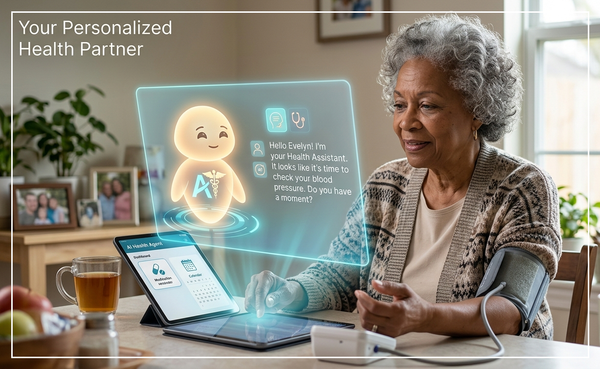
Imagine picking up the phone, saying one word, and your mom immediately interrupting you with, “What’s wrong? You sound tired.” That’s annoying, but she’s usually right. She doesn't need a medical degree to know if you're stressed, sick or depressed; she just knows your voice. Now, tech companies are instructing AI to do just that, except the AI is looking for diseases you don't even know you have yet.
Welcome to the vocal biomarkers age.
How could this possibly work?
We often take speech for granted, but it really does require your brain, lungs and vocal cords all to work together perfectly. Wherever something goes wrong in your body: a neurological glitch, a respiratory problem, your vocal cords tighten or flutter in ways human ears can’t detect.
But AI can take a 2-second clip of your audio and break it into thousands of data points to capture those tiny changes your voice makes.
The Big Ones Right Now
These companies are actually embedding this tech into the healthcare system:
- Sonde Health: A spinout of PureTech Health, leverages a large database of voice samples that are medically labeled to develop enterprise APIs that monitor respiratory health, cognitive changes and “mental fitness” through short voice recordings.
- Canary Speech: The company analyzes around 40 seconds of conversational speech to track progressive neurological diseases and behavioral health conditions such as stress and anxiety.
- Kintsugi Health: Award-winning startup that utilizes an API-first deep learning platform to identify signs of clinical depression and anxiety from just 20 seconds of free-form speech, in any language spoken.
The Good Vs The Dystopian
The Good:
- Early Warning: It helps you identify diseases like Alzheimer’s or Parkinson’s way before anyone else could and possibly even give you a head start on your treatment.
- Zero Cost If you have a phone you have a diagnostic tool. This is a game changer for those who can't buy expensive trips to the hospital.
The Bad:
- Corporate Snooping: What if health insurance companies buy this data? Your premiums could go through the roof because Alexa heard you coughing or sounding “depressed” in your own kitchen.
- Over-Diagnosing: Receiving constant notifications that your voice sounds 5% more anxious is a quick road to hypochondria.